









“Leave the money matters to him.” “I am not a numbers person.” “I trust him to handle it…”
I have heard each of these statements from brilliant, capable women. Women who run departments, raise children, build businesses and carry entire families on their backs. Yet somehow, when it comes to their own finances, they hand the baton to someone else. And many of them have paid dearly for it.
I have seen it play out in ways that break the heart. The widow who discovers after decades of marriage that she has no idea what accounts exist, what debts are owed or what assets she is entitled to. The separated woman who cannot access funds she indirectly contributed to because nothing was ever in her name. The salary earner who hands over her entire income every month and must ask, or even sometimes beg, for money to meet her own personal needs. These are not rare stories. They are alarmingly common and have their root in financial dependence dressed up as trust or tradition.
Financial literacy is not about becoming an economist or memorising investment jargon. It is simply the ability to understand how money works, how to earn it, save it, grow it and protect it. For women in particular, it is not just empowering. It is survival.
Women globally outlive men by an average of five to seven years, according to the World Health Organisation. This means more years of retirement to fund, more healthcare costs to absorb and, in many cases, more years without a husband’s income. Yet according to a 2023 report by the Global Financial Literacy Excellence Centre, women consistently score lower than men on financial literacy assessments across both developed and developing economies. In Nigeria, the Enhancing Financial Innovation and Access survey found that women are significantly less likely than men to hold formal bank accounts or access credit. Not because they lack capability, but because financial decision making has for too long been framed as someone else’s responsibility.
Girls are taught to cook, to dress well and to speak confidently, but rarely taught compound interest, investment portfolios or the importance of an emergency fund. That gap is not accidental. It is cultural. And it produces women who are highly competent in every other area of their lives but completely exposed the moment a relationship ends, a partner falls ill or circumstances change without warning. Financial literacy protects you from predatory schemes. It gives you the confidence to ask hard questions when someone is managing your money. It ensures that if the unexpected happens, such as a job loss, a health crisis or the breakdown of a marriage, you are not starting from zero with no idea of where you stand. Understanding your money means understanding your options, and options mean freedom.
A 2021 report by McKinsey found that women are more likely to keep savings in accounts with low yields and less likely to invest in stocks or mutual funds. These patterns are driven largely by lower financial confidence. Ironically, research published by Fidelity Investments found that when women do invest, they outperform men by an average of 0.4 per cent annually. Women tend to be more patient, less impulsive and take a longer view. The problem is never ability. The problem is that too many women have been kept, knowingly or not, at the edges of their own financial lives. When a woman becomes financially literate, she does not just transform her own circumstances. She raises financially aware children, negotiates her salary with confidence, protects her assets and walks into every room knowing her worth is not dependent on anyone else’s willingness to share information with her.
You don’t need to overhaul your life overnight. Start small. Start somewhere. Open a savings account in your name and understand its interest rate. Learn the difference between a fixed deposit and a mutual fund. Set a monthly budget not as a restriction, but as an act of intention. Ask your relationship manager questions. Read. Attend webinars. Follow credible financial education platforms.
This Women’s Month, the most powerful thing a woman can do for her future is to own it completely. Not outsource it, not avoid it, not defer it until ‘the right time’, which, by the way, never arrives on its own. Your money is your voice. Your savings are your security. Your financial literacy is the thing no one can take from you, no matter what changes.
At Union Bank, we are committed to championing financial inclusion and literacy for women across Nigeria through alpher, our women banking proposition.
Visit www.unionbankng.com/alpher to join the alpher community, designed to help you take control of your financial future.
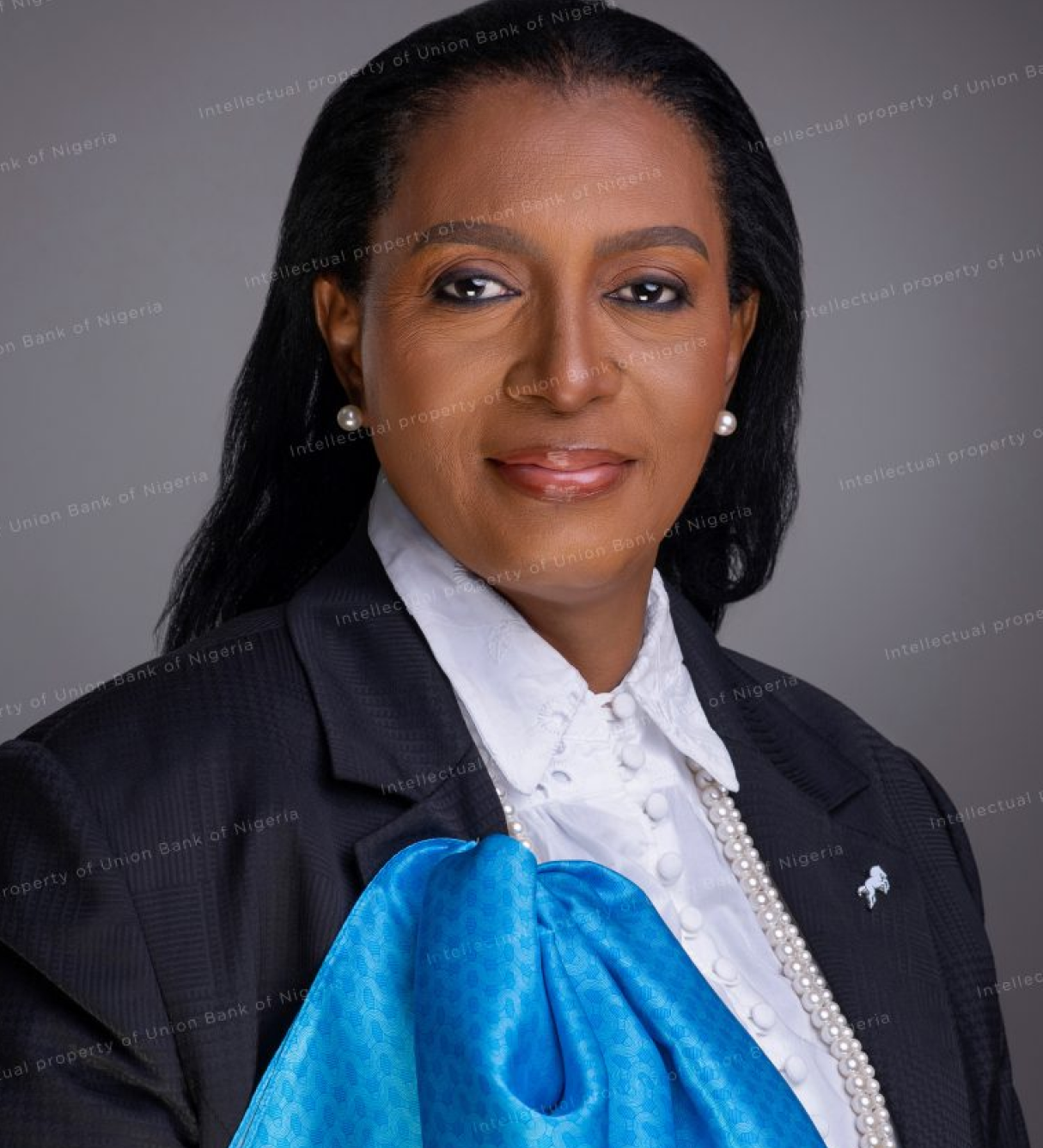
Aderonke Chukwudeme
Head, alpher
Union Bank of Nigeria